Showing posts with label Guest blog. Show all posts

Thursday, July 11, 2013

A Sea Change In Hollywood Sci-Fi?

Silver Screen Saucers

GUEST BLOGGER

Jack Witek

Apart from waging war on digital rights and the commons of information communications technology, facing off against anti-monopoly activist campaigns, ruining beloved intellectual properties in a combine of by-ups, various narcissistic lifestyle cults-cum-quasi-religions, and escape into the embraces of drug addiction and petty criminality, Hollywood has two major obsessions: the military and alien life, and in combination the military facing off against alien life.

Silver Screen Saucers ordinarily takes a critical eye to Hollywood and how its partnership with national security state public relations bumps up against and influences its sci-fi productions, from the 1953 Robertson Panel to the ‘works’ (if we can be generous) of Michael Bay and Peter Berg today. But here I would like to look at three sci-fi blockbusters from this summer, and how they have beat a different track, in spite of their ostentatious major studio backing, and how they each in their own way speak against the cultural hegemony, in a Trojan fashion, via the medium of old-trope genre icons – Star trek Into Darkness, Iron Man Three, and Man of Steel. And not to wander too far from this site’s focus, each film also touches directly on disclosure of alien life. Each of them are essentially first contact films, ‘disclosure’ as it is called, dealing with the aftermath of first contact. Indeed, tapping into UFO lore, in the overture to the main story, Star Trek Into Darkness begins with the Enterprise saving a primitive type-0 civilisation from environmental catastrophe. After the expediencies of the situation force the crew to reveal themselves and their technology in the open, the inhabitants begin worshipping them as gods.
 
~
 
“He tasks me. He tasks me and I shall have him! I'll chase him 'round the moons of Nibia and 'round the Antares Maelstrom and 'round Perdition's flames before I give him up!”

- Khan Noonan Singh, Star Trek II: The Wrath of Khan.

“Give not thyself up, then, to fire, lest it invert thee, deaden thee; as for the time it did me. There is a wisdom that is woe; but there is a woe that is madness. And there is a Catskill eagle in some souls that can alike dive down into the blackest gorges, and soar out of them again and become invisible in the sunny spaces. And even if he for ever flies within the gorge, that gorge is in the mountains; so that even in his lowest swoop the mountain eagle is still higher than other birds upon the plain, even though they soar.”
“But oh! shipmates! On the starboard hand of every woe, there is a sure delight; and higher the top of that delight, than the bottom of the woe is deep. Is not the main-truck higher than the kelson is low? Delight is to him — a far, far upward, and inward delight — who against the proud gods and commodores of this earth ever stands forth his own inexorable self.”

- Ishmael, Moby Dick.

PLOT SPOILERS AHEAD

Star Trek Into Darknessnot only returns to a Trek favourite in reviving Khan, it solidly returns the franchise to its conscientious socio-political roots. As the Wikipedia entry states: “Star Trek: The Original Series addressed issues of the 1960s, just as later spin-offs have reflected issues of their respective decades. Issues depicted in the various series include war and peace, the value of personal loyalty, authoritarianism, imperialism, class warfare, economics, racism, religion, human rights, sexism, feminism, and the role of technology. Roddenberry stated: ‘[By creating] a new world with new rules, I could make statements about sex, religion, Vietnam, politics, and intercontinental missiles. Indeed, we did make them on Star Trek: we were sending messages and fortunately they all got by the network.’”

Into Darkness addresses wartime disaster politics. In the aftermath of the genocidal destruction of Vulcan in the previous film, certain figures within Starfleet like Admiral Marcus (reminiscent of General Keith Alexander, the inverse of people who watch the films today and wish they could live in that future age, who seem instead to wish they could have been around in an age of empire) take their cue amid the shock and paranoia, engaging in deeply covert off-planet arms build-up and militarisation of Starfleet. The mastermind of this military coup-in-waiting, Admiral Marcus - after the plucky Enterprise crew stumble upon his designs thanks to Kirk’s vengeance-driven indefatigably irascible irresponsibility - attempts to destroy them in a false flag military attack to be blamed on the Klingons, a believable, sellable, yet utterly overblown threat.

This all begins when Marcus himself comes into contact with a cryogenically frozen super-soldier and condemned war criminal from Earth’s war-ravaged past, Khan Noonan Sing, recruiting his expertise to militarise Starfleet. In an attack obviously reminiscent of the London 7/7 terrorist bombings, Khan, betraying him and going it alone, strikes at Marcus’ underground covert military bureaucracy and development base on Earth. Marcus, in a bid to clean up the situation, manoeuvres Kirk and the Enterprise on a mission to assassinate Khan in an orbital strike conducted under martial law. Kirk eventually sees that he is being played, and resolves to bring down Marcus.

As Harry Knowles writes in his review:

“The first film saw a 9/11 shock and awe attack on Vulcan that resulted in its complete annihilation. The attack also targeted Earth... In addition, that very first attack – it took Kirk’s father – a father that, in our beloved Trekverse, lived and served as a constant inspiration for Kirk. In JJ’s, old Tiberius has the swagger and the libido of Shatner’s Kirk, but he isn’t prone to preach his ideals to Starfleet. Instead, he’s raised with at least one step-father that he has zero respect for – and is prone to reckless adrenaline rushes. Shatner’s Kirk was an adventurer at heart, marvelling at the infinite variety of civilizations out there around the stars. We can see some of that with Pine’s Kirk – he’s anxious to get out there, but he hasn’t believed in Starfleet for most of his life.

Now – is this Starfleet still based on the idealism of the 1960’s America? No. With Star Trek Into Darkness, the Darkness of the film isn’t Khan. It isn’t the Klingons or the Romulans; it’s the Darkness that has infected policy in Starfleet. In other words, this is a metaphor for post-9/11 America. In JJ’s Verse, he has a Kirk that doesn’t yet value the core beliefs of Starfleet... Meanwhile, the rest of his crew... good souls like Spock and Scotty... They raise these issues with Kirk, but Kirk doesn't want to hear it. He’s us. Kirk has always been us. But just like Kirk, we’ve changed.

Vengeance has become something our Country seeks. Since 9/11 we have adjusted our core beliefs and laws to make things more convenient for a government that has been given a licence to seek vengeance to protect us at all costs.”

Whereas the original Wrath of Khan dealt with the hyper-aggressive military mind of the rogue Khan, in this alternate timeline ‘remake’, it is Marcus as symbol of the military-industrial-complex who is the main focus, and where the original film borrowed heavily from and riffed on Moby Dickin a script peppered with some truly awful dialogue and dodgy exposition, the solidly written Into Darkness explores some of the depths of what Wrath of Khan only hinted at poetically (and iconically). Journalist Chris Hedges, writing in his Truthdig column, in the article Life is Sacred, states that the ascendant metaphor for our corporate political world order is Moby Dick: “All my means are sane,” Captain Ahab says of his suicidal pursuit of Moby Dick, “my motive and my object mad.”
 
The film’s main arc follows Kirk coming to terms with his mortality, and learning the value of family - of a family he never really had. Starfleet strays, but is brought back into the fold of peaceful civilisation. Kirk breaks the rules, but ultimately learns the hard and fast way why those rules matter so. This much cannot be said of President Obama, whose popularity ratings in real terms must surely be dwarfed by the box-office take of the new Star Trek in the wake of so many scandals and so much open criminality under his watch.

A month before the release of Into Darkness, Nation Books published investigative journalist Jeremy Scahill’s Dirty Wars: The World is a Battlefield. In a talk with Noam Chomsky and Amy Goodman at Harvard university in April, he said:

”We’re here at a time when a popular Democratic president, who is a constitutional lawyer by trade, has expanded, intensified, continued and, most importantly, legitimized, in the eyes of many liberals, some of the most egregious aspects of what the Bush administration called its counterterrorism policy and the Obama administration continues to call its counterterrorism and national security policy. And despite the fact that this very popular Democratic president campaigned on a pledge to radically change the way that the U.S. conducted its business around the world and, upon taking power, issued a number of executive orders that were purportedly aimed at shutting down secret prisons, ending torture and closing Guantánamo, what has actually happened is that the Obama administration has made cosmetic changes, tweaked the language, made a few adjustments to the detention program, to the—what’s called the targeted killing program, but it’s anything but targeted, as we’ve seen so often—it’s an assassination program. And this administration has sold the idea to many liberals in this country that this is a clean war, that it’s a smarter war than the ones that were being waged by his predecessor.”

Scahill also wrote the massive expose Blackwater: The Rise of the world’s Most Powerful Mercenary Army, bringing this issue to the public’s attention, so much so that during Into Darkness Scotty cross-examines one of Marcus’ thugs over whether he is a private contractor.

But these undertones of the film are apparently too faint for some to pick out, as seen with this credulous and missing-the-point-much Wired review. But, at any rate, surely you are on the right track with a sci-fi when religious fundamentalists target you over a hinted-at-sex scene.

~

When in 2002, Avengers Assemble mastermind Joss Whedon tried to get his classic show Firefly off the ground, it was shut down by Fox during the run-up to the Iraq invasion. Axed, slaughtered off-guard. Unceremoniously, they even refused to air 3 of the 14 episodes that had been made, and even those weren’t shown in order or broadcast at any reasonable time for a new property. Backtracking, they washed their hands of it, and presumably everything that the show so beautifully symbolisedOver a decade later, Iron Man Three, based on Warren Ellis’ Extremis comic (as is the entire trilogy, though he hardly gets much credit for it) takes an utterly unavoidable, overt line against the War on Terror™ qua mass media manipulation. In the wake of Avengers Assemble, of the alien invasion of New York, Stark is suffering from full blown PTSD. We have our supervillain, the technocrat venture capitalist Aldrich Killian, using as a wind-up menace the terrorist Mandarin, who it turns out is an out of work actor from Croydon, London, with the Vice President of the US in his other hand. As he says in the film, the pinnacle of modern war is to control both sides and profit from the dialectic chaos. As the Mandarin likes to regale: “True story about fortune cookies: they look Chinese, they sound Chinese, but they're actually an American invention. Which is why they're hollow, full of lies and leave a bad taste in the mouth.”

Much as Kirk faces his own humanity in Trek, Stark undergoes a similar journey. The alien incursion into New York from Avengers has left him disturbed and having panic attacks. He obsessively escapes into working on his suits, the luxury of being a former arms-dealing billionaire heir in the technologically exponentially advanced near future. Alright for some. The moral lesson Tony learns, to borrow from Fight Club, is that he is not his company, not his fortune, not his techno-paradise sea-cliff villa, not his fancy suits. He has to learn to deal with his vulnerability, and not hide behind his suit systems - weapons Killian and the Vice President use against him. As he brings down the media projection that is Mandarin, Stark realises, perhaps, the futility and fragility of his own media-based ego that he has always hidden behind. At the end of the first film, when he declares to the assembled press that “I am Iron Man,” it’s a slightly awkward confession, and a stunt. By the end of the third film, when he again says the line, it’s an ironic affirmation of character. And just as in the first film he had the choice to continue to build armaments or to turn his company back around to fulfil its founders’ ambition to bring clean, renewable, cheap energy to the world, in the last instalment of the trilogy, we have the Extremis technology, that, like atomic energy, can be used to heal and to build or to kill and wipe out. Oddly paralleling the healing serum made from Khan’s blood in Into Darkness. The same themes: the power to destroy or the power to create and to mend. A sort of techno-alchemical transmutation of one into the other. And, at the end of it all, he also has to deal with Pepper Pots being more fully an equal for him now that she has been subjected to Extremis.  

~

“You will give the people of Earth an ideal to strive towards. They will race behind you. They will stumble. They will fall. But in time, they will join you in the sun. In time, you will help them accomplish wonders.”

- Jor-El, Man of Steel.

Man of Steel, put out by industry iconoclasts Legendary Pictures, is to Superman what Nolan and Legendary’s Dark Knight trilogy was to Batman – a deconstruction of a cultural icon and its rebuilding from the ground up. Gone are the camp red pants, the flamboyant villains, the endlessly iterated good samaritanism and mythic small town rural iconography. Whatever the merits or demerits of any of the previous Superman productions, this is a Man of Steel for the new century, not forsaking its roots, but respectfully getting closure and moving on and up.

Just like with Into Darkness and Iron Man Three, but really going to the heart of this story, are issues and themes of transhumanism. Eugenics. Supes, Kal-El, comes from a civilisation founded on it. In the last days of planet Krypton’s existence, when a sclerotic, decadent political order reigns in a time of imminent environmental crisis owing to energy mismanagement, the military caste, led by General Zod, instigate a coup. Zod is no longer the thug in tight pants and cloak with his gang of intergalactic goons harrying Supes while he tries to rescue kittens from burning trees. Here, he’s more of a Hitler archetype. An anti-Christ figure, in fact. He is a racial supremacist and a genetically engineered military force of nature, who believes he alone and his caste can guide Krypton out of this decline and re-establish the glory of the old galactic empire.

Superman, Kal-El, at this point a helpless baby, is the first child in living memory to be born of natural birth, not genetically engineered and grown. While Zod is the leading military mind of his time, Supes’ father, Jor-El, is the leading scientist, who, if he was listened to, could have averted the planetary disaster. In the end, the counsels and agitations of both are ignored by the ruling class, and all that’s left is to fight and gnaw like rats in a sinking ship. Bertrand Russell, in The Impact of Science on Society, wrote:

“Some part of life – perhaps the most important part – must be left to the spontaneous action of individual impulse, for where all is system there will be mental and spiritual death.” But in Kal-El, shipped off to Earth, in a region of former colonisation, is hope. ‘Hope’ is his house sigil, the symbol on his chest, clearly echoing Obama’s electioneering, and, in a nice last word, actually reclaiming Superman qua Superman from the filthy clutches of career politicians.


About a year ago, when I first started hearing of their being a new Superman film, I internally groaned. And I wonder if that is not a similar reaction that people are having to Disney’s The Lone Ranger, which is doing disastrously right now. I could be off, but did people see the cowboy hat, the whorehouse and the train chase in the trailer and just despair a little? Superman, while super, is still a man, a blue-eyed Caucasian archetype at that. A neo-Jesus archetype. But Man of Steelactually subverts the very bedrock of the comic icon by taking the ubermensch figure and making him, in fact, a living retort to the chauvinistic, hyper-aggressive transhumanist eugenics that he paradoxically, inexplicably comes from, and that through the selfless love of his parents he escapes. “What if a child dreamed of becoming something other than what society had intended. What if a child aspired to something greater,” Jor-El muses.  

One of the other things that has dramatically changed in the Superman universe is the role of Lois Lane. Whereas before she was clueless to her boyfriend Clark Kent’s actual identity, this time around, played beautifully by Amy Adams (please see her in The Master if you haven’t, she is a scary lady in that film), she is the investigative journalist going against the wishes of the military and putting her own career on the line, who tries to break the story that we have made first contact. Script-writer David Goyer on why they made this change:

“I just thought it was silly. If you're going to make her smart, if she's going to be Superman's love interest, Lois needs to stand on her own as a character; she needs to be really smart and have a lot of gumption, and she can't just be the damsel in distress, or else why is Clark/Kal interested in her? People say that a hero is only as good as his or her villain, but I also think the same is true of his or her love interest. It strained credulity for me that it took Lois ten or twenty years to figure out that Clark was Superman. I call bullshit on it, especially if she's sleeping with him. That was something that we talked about with DC, and said, ‘Maybe it's time to move on from that.’”

Zod, and what’s left of Krypton, including his right-hand-lady Foara, a sort of Eva Braun from space, eventually catches up with him on Earth. They bring a terraforming platform, a World Builder, rescued from an old, abandoned neighbouring solar colony, and get to work turning it against Earth with the goal of turning our planet into a clone of Krypton, making it habitable for them, but In the process wiping out all native Earthlings. Supes, stuck in the middle, and in order to save us all in the face of relentless Zod, in a momentous decision, ends him, snapping his neck, and thus commits pre-emptive genocide against the genocidal. It’s a poetic contradistinction, alright.

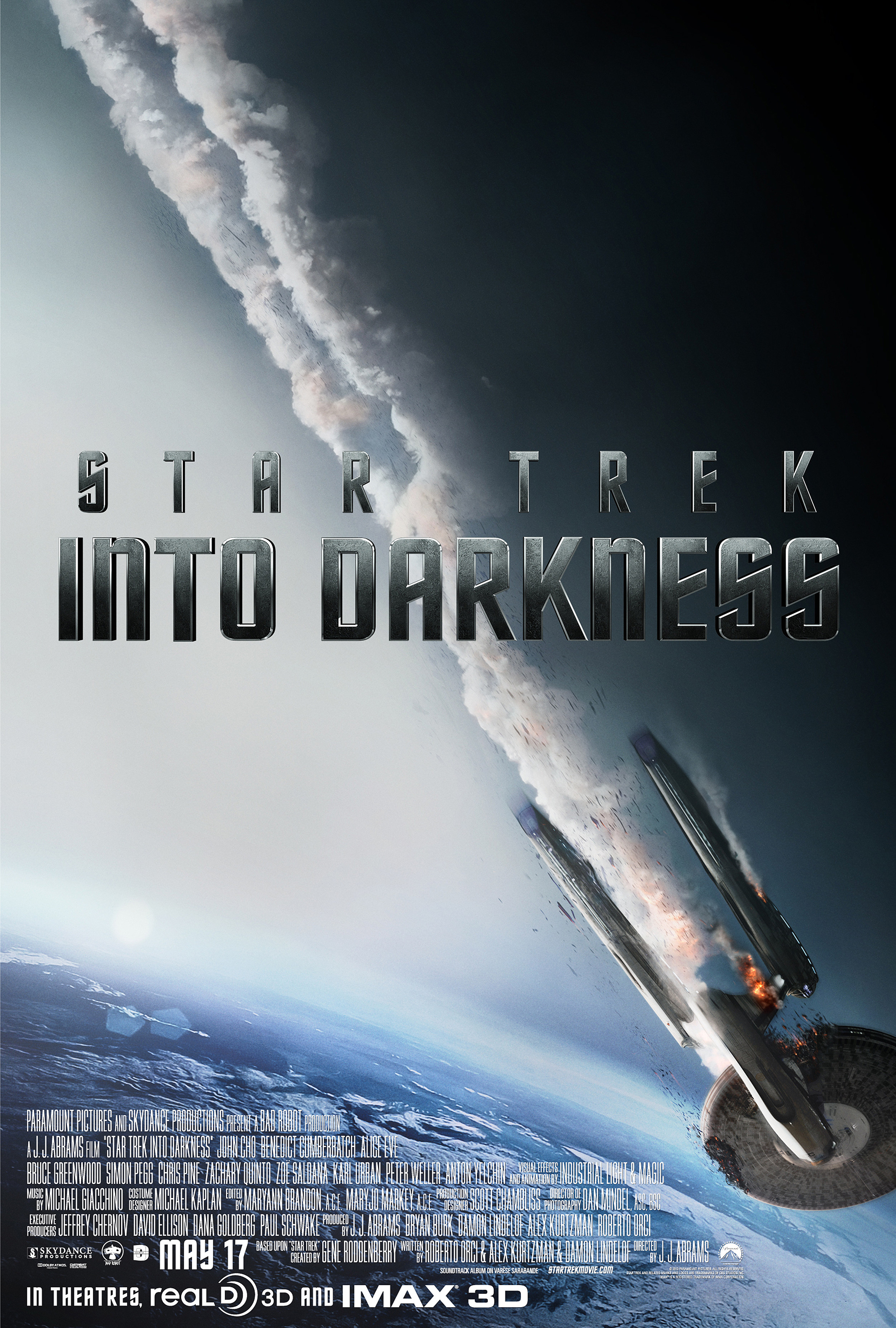
But returning: Again, paralleling Star Trek, and Extremis, the World Builder is strikingly reminiscent of Wrath of Khan’s Genesis Device, a life-giving terraforming machine that Khan tries to use as a weapon against the Enterprise in the original film. Which brings us back full circle, to ‘ancient aliens’, to the Biblical iconography and symbolism, to the power to destroy or create, technology as a double-edged sword, even gnosticism. The old guard in literary criticism and theory maintain that the antique is ever contemporary, and that’s certainly an ethos that is partly guiding these new franchises. Actually, you only have to look at the posters to Man of SteelInto Darkness and Iron Man Three to see Biblical ‘fall’ motifs depicted fairly strongly.

Samuel Johnson said: “He who makes a beast of himself gets rid of the pain of being a man.” In sci-fi blockbusters like these, one could alter the maxim: We make myths of ourselves, we embody Campbell’s ‘Hero with a Thousand Faces’, to escape the pain of being a human, to escape the tyranny of the historical moment, in pre-emptive artistic retort to what E.P. Thompson called ‘the enormous condescension of posterity’, with stories. As Laurie Penny wrote recently:

“Ultimately it’s all about stories – who gets to tell them, who gets to be the hero and who’s stuck as the sidekick. Sweeping social change usually happens in stories first, and science fiction often has an agenda. What could be more political, after all, than imagining the future?

It goes like this: somebody dreams up a far-out notion of how the world might look if things were different and writes it down or acts it out and, gradually, people are given permission to imagine other lives. The first black president of the United States cropped up in science-fiction stories in the mid-1960s... People do the work of changing the world – but stories give us permission to reimagine it.”

Pulitzer Prize-winning journalist and story writer Katherine Anne-Porter, in her 1940 introduction to Flowering Judas, wrote:  

“For myself, and I was not alone, all the conscious and recollected years of my life have been lived to this day under the heavy threat of world catastrophe, and most of the energies of my mind and spirit have been spent in the effort to grasp the meaning of those threats, to trace them to their sources and to understand the logic of this majestic and terrible failure of the life of man in the Western world.

In the face of such shape and weight of present misfortune, the voice of the individual artist may seem perhaps of no more consequence than the whirring of a cricket in the grass, but the arts do live continuously, and they live literally by faith; their names and their shapes and their uses and their basic meanings survive unchanged in all that matters through times of interruption, diminishment, neglect; they outlive governments and creeds and the societies, even the very civilization that produced them. They cannot be destroyed altogether because they represent the substance of faith and the only reality. They are what we find again when the ruins are cleared away.”

Jack Witek is an aspiring academic and sometime blogger, based in the South of England. He lives with his pet cat Adramelech, and personally welcomes our new transhuman overlords. @JackWitek

Thursday, October 11, 2012

Alien-human hybridization was predicted by Hollywood

Silver Screen Saucers

GUEST BLOGGER EXCLUSIVE

The Stranger Within
Foreshadowing, Unexplainable Pregnancies, Hybrid Children and the Creative Process

By Mike Clelland

Hand-lettered TIMELINE of critical events within the essay.

Something extremely strange is interwoven into the UFO phenomenon. There are weird coincidences and synchronicities that seem to merge with the overall topic in ways that defy any easy explanation. This includes a kind of predictive manifestation in our pop culture. If you dig just a little bit you’ll find that movies, radio drama, literature and (especially) comic books all have a way of anticipating the plot points of the unfolding UFO drama.

Anyone of a certain generation will remember the ABC Movie of the Week. It featured hour-and-a-half-long made for TV movies each Tuesday night. I clearly remember one of these movies. It was about a women who is mysteriously pregnant with an alien child. I am 50 years old as I write this and I would have been 12 years old on that long ago Tuesday night in 1974. For reasons I don’t quite understand, bits of that movie have been stuck in my head for the last 38 years.

I’ve been actively studying the UFO abduction phenomenon and I recently reviewed a series of questionnaires that abduction researchers will use with their clients. One of the consistent questions is: “Do you crave salt?” 

When I read that I immediately went back to that TV movie, and I clearly remembered a scene where a pregnant woman would compulsively put salt on her salad at an outdoor restaurant. It didn’t take but a few mouse clicks to get me to YouTube where I watched that very scene. Surprisingly, the scene played out exactly as I remembered it. This clip is embedded below...


The fact that my memory was so eerily precise after all those years piqued my interest, so I ordered a used DVD copy of the movie, and in less than a week I was watching it again. 

The movie is titled The Stranger Within, and watching it opened up a deep dark hole of synchro-weirdness.

Before we examine the movie, it’s important to explain what has emerged in recent years concerning the strange experiences of women abductees.

Women, pregnancy and UFOs

Women claiming the UFO abduction experience are telling stories that are frighteningly similar. What is being told stretches my fragile mind.

These abductions appear to be ongoing starting when they are very young. Upon puberty a nightmare set of procedures begin to unfold. These young women are somehow impregnated during their abduction events, it might be done by technological means or it might be done with someone (or something) onboard a craft. Like almost all abduction events, they are subjected to some form of mind control that makes them follow commands and erases their memories.

These women will tell of having the all symptoms of pregnancy, often it will happen without any history of being sexually active. Later, usually within the first trimester, the women will awake one morning with the very real knowing that they are no longer pregnant. They might have memories of an abduction during the night where the fetus is removed.

Both men and women abductees tell of rooms onboard ships that are lined with some sort of liquid filled glass aquariums, each with a fetus floating inside. These incubation chambers are reported with consistency. Sometime later these women will be abducted again, and presented with a tiny baby, and they’ll be told that they are the mother. The infant isn’t normal, it appears sickly and thin, it seems to be a hybrid of us and them.

These women will experience ongoing abduction events where, over the years, they will see their children growing up. They will appear in nurseries and classrooms and they will be growing up at an accelerated rate that wouldn’t match their life on earth. Eventually, these women may meet their children as young adults, sometimes this happens here on earth while they are awake and fully consciousness.

There are plenty of reports in the literature of children born to abductee mothers with curious traits and abilities, including psychic skills, profound empathy or a very high IQ. Often the mother will remember being abducted during the child’s pregnancy. Indigo children, Star Seeds, Light Workers and Crystal Children are all terms used to describe these kids.

This short summary of experiences doesn’t emerge in any kind of linear construct, it is usually a mess of fears, impressions, dreams and mixed-up snippets of memory.

I am cautious to give a percentage, but anecdotally it is nearly consistent that pretty much ALL women who claim the abduction phenomenon will have experiences that involve cryptic pregnancies.

I need to emphasize that these experiences are happening to real women, and they are profoundly challenging and emotional. When someone shares their life events with me, and when they tell about their unaccountable pregnancies, they will almost always end up sobbing.

Reported experiences by abductees

There is a long list of odd coincidences that show up in The Stranger Within that seem to have accurately predicted what is now common in the UFO abduction lore. These are listed as in bulleted points below:

~ Amnesia of the abduction experience, later retrieved through hypnosis.

~ Driving to a secluded spot for unknown reasons.

~ Wounds healing rapidly.

~ Marks on the body that can’t be explained, only to heal rapidly without scaring.

~ Rh negative blood type. 

~ Being mysteriously cured of an unknown ailment.

~ Lower than normal body temperature.

~ The urge to research and study scientific topics.

~ Sensitivity to sound.

~ Excessive craving for salt.

In addition, some researchers have noted that an overwhelming percentage of abductees are creative types. In the movie Ann is a painter.

In the movie, the fetus was growing much faster than a normal child, the gestation was accelerated, and the birth was due months early. This also shows up in the abduction literature.

Abduction questionnaires

UFO abduction researchers will have a set of questions they’ll ask their clients. You can infer a lot from these questions. Many of these questionnaires are posted on-line, and I’ve collected some relevant questions that play out in the movie, these are listed below:

~ Do you have an unusual fear of doctors or medical treatment?

~ Have you ever experienced a dramatic healing?

~ Do you feel that aliens have come to create mutants through a process of interbreeding accomplished by their superior science?

~ Do you have an obsessive memory that will not go away, such as seeing an alien face or a strange baby, or an examination table or needles, etc.?

~ For women only:  Have you had frequent female problems and reproductive difficulties?

~ If you are a female, have you experienced a gynaecological problem that you suspect is related to an abduction experience? 

~ Men and Women:  Have you had frequent urinary tract infections?

~ Have you had any disturbing or realistic dreams about babies or small children?

~ If you are a woman, have you ever felt certain that you were pregnant, but the pregnancy suddenly disappeared?

~ Have you ever had a false pregnancy or missing fetus?

~ Have awakened with soreness in your genitals which could not be explained?

~ Do you crave salt?

Plot summery for The Stranger Within(mucho spoilers)

Barbra Eden, the curvy starlet from I Dream of Jeanne, plays the dramatic role of Ann Collins, the wife of a college professor who is mysteriously pregnant. Her husband has had a vasectomy in response to Ann’s life threatening experience with a pregnancy three years earlier. The details of that event are only hinted at in the script. The husband’s vasectomy is pretty bold stuff for a made for TV script from the early 70’s, and it allows for a lot of marital tension and open dialog about infidelity and abortions.

As the movie progresses Ann’s behavior becomes increasingly strange. The husband, together with Ann’s doctor and a close friend, eventually come to the conclusion that she was impregnated by space aliens during an abduction event where her memory was erased. The narrative unfolds with absolute seriousness, this in an era where anything involving UFOs was played for giggles.

Please don’t think this movie is some lost masterpiece of the cinema, it certainly isn’t. It’s a modest little movie made with a sparse little cast on a low budget. The early 70’s is an easily dismissed chapter of television filmmaking, there are a lot of elements that seem tacky and laughable by today’s excessively slick standards. But for me, there is something truly haunting about this movie.

The director of The Stranger Within was Lee Philips(1927–1999). He was a busy guy during his years as a director for TV. Philips was also an actor and he played the role of radio DJ Gene 'Buddy' Maxwell in the very first Outer Limits episode, Galaxy Being.

"Yes Master!"
Barbara Eden will forever be remembered as the girl in the bottle from I Dream of Jeanne, a lighthearted depiction of The Djinn (the source of the term Genie). Rosemary Ellen Guiley is a paranormal researcher and in her 2011 book The Vengeful Djinn(written with Phil Imbrogno) she explores how the Djinn mythology closely parallels the modern UFO abduction phenomenon. Seems the Djinn show a keen interest in pregnant women and are known to abduct babies.  

I Dream of Jeanne also featured one of the key ingredients to any good UFO conspiracy, astronauts keeping esoteric secrets! I’ll add that in this sit-com Barbara Eden was the source of some seriously weird sexual tension, much like her role in The Stranger Within.

Ms. Eden has always had a rather strange halting voice, and this serves her well in this eerie movie as well as in her role as Jeanne. Curiously, the name Eden seems appropriate for a woman who is bringing the first alien hybrid child into our world.

Barbara Eden has recently penned a 288 page autobiography where she writes exactly two sentences on this film:

In 1974 I appeared in a real howler of a TV movie of the week, The Stranger Within, in which I gave birth to an alien baby, ate raw meat, and drank a lot of coffee. Sigmond Freud probably would have had a field day analyzing that script!

Alas, I’m no Freud, but I am having a field day.

There is a long list of plot points within this made for TV drama that are extremely predictive in a way that stretches my mind.

As noted above, present day UFO lore is flooded with stories from women abductees who tell of mysterious pregnancies, erased memories and hybrid children with miraculous abilities. These issues are at the core of this fictional narrative. That said, there doesn’t seem to be any logical inspiration for the original story.

The movie was aired on October 1st 1974, but it was based on a short story from 1953. This story was written over 30 years before any of these bizarre claims about hybrid offspring had entered the collective consciousness.

I believe it was Budd Hopkins’ 1987 book Intruders where the initial accounts of strange pregnancies and hybrid fetuses first appeared in print. Initially, this pattern was called: “the tiny baby syndrome.”

This was followed by Raymond Fowler’s 1991 book The Watchers. Next was Abducted!(1994) written by Debbie Jordan and her sister Kathy Mitchell. This is a first-person account from the two main characters from Hopkins book. In 1995 Kim Carlsberg published her first-person account of the same phenomenon in her book Beyond My Wildest Dreams.

Pregnancy and UFO abduction are part of the 1957 Antonio Villas-Boas case in Brazil. The 23 year Boas was taken onto a craft, and after a series of examinations he was left alone in a room with a humanoid woman. He said he was strongly attracted to the woman, and the two had sex. When it was over the female smiled, rubbed her belly and pointed at the sky. Boas took this to mean she was now pregnant and was going to raise their hybrid child in space.

When the Boas story was initially published the sex and pregnancy stuff wasn’t included in any of the public reports, it was deemed to bizarre to be taken seriously.

The original short story

The 1974 movie The Stranger Within was based on a 1953 short story by Richard Matheson (left) titled Mother by Protest (later re-published as Trespass). Matheson himself adapted it for the small screen.

Matheson was born in 1926 (the same year as my father, something that makes me pay closer attention) and his creative output has been impressive. He has penned a massive amount of fantasy, horror, and science fiction. 

It would be easy to conclude that Matheson was somehow inspired by details from UFO reports and he simply wrote his short story as a response to their appearance in pop-culture at the time. But that just doesn’t fit, 1953 was a long time before any of this information emerged.

Reading this tightly knit little drama left me impressed. The short story is essentially the same as the movie, including some word-for-word dialog.

In both versions the wife begs for the husband to believe her, and she says she wants to be hypnotized as a way to prove her honesty. In the short story the husband’s closest friend states: “...do what she suggests and try hypnosis, truth serum, anything.” They follow up by injecting a “truth” serum on the wife and the results read like a hypnosis transcript. 

Near the end of the short story, as the wife is going into labor, she slips in and out of consciousness and she tells the husband her memories of the event while he was away.

“In the yard, David,” she muttered, still unconscious... “I heard a sound and I went out. The stars were bright and there was a crescent moon. While I stood there I saw a white light come over the yard. I started to run back to the house but something hit me but then it was black and I couldn’t remember. Anything. I tried to tell you but I couldn’t remember, I couldn’t remember, I couldn’t...”

The use of the term crescent in her description made me take notice. David Huggins is a UFO abductee and artist. His experiences involve a lot of weird sex and hybrid children. He tells of having a life-long loving relationship with a chalky white alien named Crescent, in reference to the crescent moon. His story is chronicled in words and pictures in the 2009 book Love in an Alien Purgatory.
 
A painting by David Huggins, one of hundreds that depict his relationship
with an alien named Crescent, seen holding the hybrid baby.
 
In the movie there is a slightly different account of Ann’s abduction. It happens during a hypnosis session performed by her husband’s friend. She tells of being hit with a ray while she was painting in the hills. She says it came from a space ship above her.

Both versions of Ann’s contact experience describe the now prototypical UFO abduction event, complete with the mind-controlled amnesia and some sort of beam of light. 

In both the book and movie, it’s the husband’s friend who solves the mystery by piecing together the clues. In the 1953 book the conclusion was that the baby is a Martian. That quaint presumption certainly matches the mindset of the era. Also in the book, the friend concludes that the Martian hybrid fetus is telepathic. Now this really surprised me because telepathy is a nearly universal component to all UFO abduction narratives, and I feel strongly that this would have been entirely unknown at the time. In the 1974 movie the term Martian isn’t used, it’s replaced by extraterrestrial. 

I read a handful of on-line reviews of the 1974 movie and several noted that it was merely a knock-off of Rosemary’s Baby with an alien twist. That doesn’t fit when you realize that the original short story was first published in 1953, pre-dating Ira Levin’s 1967 book by 14 years. The more logical conclusion would be that Levin was inspired by Matheson.  

Rh negative blood 

The issue surrounding Rh negative blood type is something that has only recently emerged within the community of UFO abduction researchers. Blood types are either negative or positive, and it’s estimated that only 15% of the entire world's population are known to have the Rh negative blood factor, with some estimates are as low as 5%. But research(albeit limited) shows that well over 50% of the people that claim the UFO abduction experience have Rh negative blood. This is a weird statistic, and it implies that the abductors have very specific interests in the people they abduct. Also, Rh negative blood is often associated with clairvoyance and psychic skills

In the movie, the doctor is perplexed and says that Ann’s blood was changing to Rh Positive. This means that her blood was Rh negative at the time of her abduction. This is a curious issue to show up in a script from over 38 years ago, especially given its relevance to present day UFO abduction research.

Hypnosis and UFO abduction

Raspy voiced David Doyle.
The best friend to the husband is a hypnotist, he is portrayed by none other than Bosley from Charlie's Angels, that right, David Doyle! Each of the sessions are dark and moody, played for maximum drama. 

Hypnosis as a tool in UFO abduction research made its debut in the public consciousness in 1966 with John G. Fuller’s seminal book The Interrupted Journey. This is the story of the Betty and Barney Hill UFO abduction event, and it’s considered to be the first published account of the phenomena. In the book, Betty tells of having a long needle inserted into her navel and she is told that it’s a pregnancy test. So, even in the very first report of alien abduction, pregnancy is part of the meme.

So, the use of hypnosis had been established eight years before the creation of this movie. The two main male characters debate the outcome of the hypnosis session, and Ann’s husband accuses his friend of “leading” his wife while she was under his spell. Here, in 1974 in a brief bit of dialog, we get a tidy summarization of the heated controversy over the use of hypnosis in abduction research.

In the short story a serum is used to induce the hypnotic effect. Though never stated in the text, this was probably Sodium Pentothal, also known as The Truth Serum. Sodium Pentothal also shows up in the modern abduction lore in a book titled Pozan (2003) by John Clark. This is a first-person non-fiction narrative about UFO abductions and profound synchronicities. In this book the author tells of receiving Sodium Pentothal during a minor surgery, and while under he said some things that terrified the Doctor. He was never able to get the Doctor to tell him what he said, but the implications are creepy indeed.


Channeling and longing

One of the hot-button subjects among abduction researchers is channeling. I am consistently shocked at how many abductees will say that since having their contact experiences they have begun to channel information from their alien abductors. These claims get dismissed with venomous contempt by a lot of researchers, but it is an unmistakable pattern among the experiencers.

In both the short story and the movie, Ann channels a strange alien language. She also speaks (in English) in the first-person as if she is an alien, she describes a deep longing for their home planet and its orange oceans and cool gray winds.

In the short story Ann says: “Now am I alien and forgotten, O lost of travelled night.” This happened while she was sleeping, and the terrified husband heard it. The text reads: “All spoken in a sing-song rhythm, in a voice that was Ann’s and not Ann’s,” a pretty accurate description of someone channeling.

Abduction researcher and therapist Delores Cannon uses hypnosis in her past life regression therapy. She has been able to bring forth alien personas while her patients are in a deep state of relaxation. What emerges is a back and forth alien dialog and it’s the basis for a long list of her books. What we see in the movie closely parallels her research techniques.

While in a trance, Ann repeats: “Take me back, take me back!”

This feeling of longing to go home is commonly reported by UFO abductees. They will sometimes state that that their soul is not of this earth but from some far off planet.

In both the short story and the movie, while speaking in the halting alien voice, Ann says she feels heavy. Some abductees will say that life on this earth has an oppressive heaviness, the implication being that they are remembering a past life lived not as a material being but as some sort of ethereal spirit, or in some other realm with different gravity.

The Sun Goddess

There is never any UFO shown during the movie, but there is reoccurring imagery of the sun, and it is constantly shown in the context of a deep longing. Ann will be lost in haunted contemplation and the camera will pan up to the sun and the image will linger there awash in lens flare (this is a staple of 1970’s movie making). The sun is a stand in for the UFO, and there is an overt sense of yearning each time it fills the screen. 

Our pregnant mother resonates a Sun Goddess. The earliest deities associated with the sun are all goddesses, much like our abductee Ann. In ancient Egyptian imagery the Goddess Isis is portrayed with a cow horn headdress cradling a solar disk. Some esoteric interpretations of that solar disk cast it as a flying saucer, implying that ancient aliens were the actual Egyptian Gods. Isis was worshipped as the ideal mother and she is often portrayed nursing her infant son, Horus God of the Sun (as pictured left). Some scholars point out that the mythology of Horus has compelling parallels to the story of Jesus. This would put Ann in the role of Mary (more on that later) 

There was a live-action Saturday morning series called The Secrets of Isis where a mild mannered woman would change into the Goddess Isis, given the absurdly low budget of the show the transformation was implied by using a close up of the sun complete with shimmering lens flare. Isis had super hero powers to fight crimes and right wrongs. This rather terrible show ran for two seasons, 1975 and ’76. 

In the movie, Ann drives a bright yellow Chevy Nova, as did my mother around that same time period. The Latin translation of Nova is “new” or “strange” and it’s a feminine word. The Latin word for star is Stella, also feminine; and some translations for nova say it is a shortening of nova stella (new star).
 
1974: lame TV / Boss cars.
 
In astronomy, Nova is a star that suddenly increases its brightness, and then fades away. This certainly matches Ann’s behavior in the movie, during her pregnancy she becomes tremendously bright by obsessively reading textbooks. After the child's birth she simply fades away, this happens in a lap-dissolve where she quite literally fades away to nothingness.

The color Yellow, the color of her NOVA, represents the third Chakra, the Solar Plexus. 

In its Hebrew origin, the name Ann means "He has favored me" and “He” implies God himself. In the story, Ann has certainly been favored by the mysterious alien Gods.

Rituals, mythology and religion  

In the movie Ann and her husband live in a gaudy house with a strange square fireplace, it sits in the center of the living room under a large vent. It must have been quite hip in its day. This fireplace has the weird feeling of being a sacrificial alter, adding to the overall strangeness of the story. Also, when Ann undergoes her first hypnotic regression the room is filled with candles creating an oppressive occult mood. The act of hypnosis is played out as some sort of eerie ritual. After the hypnosis session when Ann channels the alien voice, the witnesses try to come to terms with what they’ve seen, and the camera is positioned behind the open fireplace, with flames rising up in the foreground.
 
Barbara Eden as Goddess with divine child.
 
The movie reaches its climax as Ann walks in a trance with her newborn child along a path through a forest, she is obviously mind controlled by her alien abductors. She is soon joined by other women carrying babies. These women are all wearing robes or flowing garments and their hair has been done up to mimic Greek Goddesses. The overall effect is of some sort of ancient ritual or occult offering. They all march willingly into the sun.

Our collective society is overtly influenced by organized Christianity, so much so that the starting point of our calendar is synchronized to the birth of Christ. Within this framework nothing is more revered that The Blessed Virgin.


Alien visitation?
In The Book of Luke, Archangel Gabriel visits Mary and tells her, “Do not be afraid, Mary; you have found favor with God. You will conceive and give birth to a son...” and she is told that the child is destined for greatness. “How will this be,” Mary asked the angel, “since I am a virgin?” A mysterious visitor from the heavens and the impregnation a young virgin? That story is commonplace in the reports of women abductees. The phrase “Do not be afraid,” is probably the single most repeated quote that gets attributed to the aliens in all of abduction literature.

In the story, Ann obviously isn’t a virgin, but the implication that she is pregnant by unknown means is central to the plot. Like Mary, her child (also a son) is somehow profoundly different. Few things in the western world are more fraught with uneasy drama than a miraculous pregnancy.

In the nutty community of UFO researchers and experiencers, the question of whether Jesus was a product of direct tampering by aliens is the stuff of endless conjecture. Was the Star of Bethlehem a flying craft checking in on their hybridization program? And in the end, Jesus was “...carried up into heaven.” (Luke 24:50-52) and his apostles were witnesses to his ascension, “as they were looking, he was taken up; and a cloud received him out of their sight." (Acts 1:9) This very much matches the conclusion of the made for TV movie, where the parade of goddesses and their divine newborns are whisked away into the sun with a lap-dissolve and a cloud. 

Pop-culture foreshadowing

1974 was a year with another odd predictive show involving UFOs. During my youth I was absolutely fascinated with the nightly show, The CBS Radio Mystery Theater. It was on a local AM radio station each weeknight at 11:07, and I would lie in bed and listen to the drama on my clock radio. There were stories of the paranormal, ghosts and monsters.

There was one strangely predictive episode titled: The Sighting. It’s a fictional re-telling of a series of UFO abductions. The original air-date was November 25, 1974, less than two months after The Stranger Within aired on TV. In this radio drama, there is set of plot points that closely match elements within a typical UFO abduction account; including mind control, repeated abductions, telepathy and implants. Again, this was long before the proliferation in the media of abduction accounts.

The power of creativity

Richard Matheson’s output over the last 62 years has been astounding. The consistency and breadth leaves me dumbfounded. His first short story was published in 1950 and for the next decade he really cranked ‘em out. The short story Trespass (the basis for the movie) emerged during that creative frenzy. Like his other early stories, it was printed in a pulp sci-fi magazine.

I am convinced that there is a very real power in the creative process, and when abandoning (or disciplining) oneself to this kind of artistic inspiration, something mysterious can unfold. The artist can somehow tap into deeper truths. The work-a-day routine of sitting in front of a typewriter (or canvas, or 2-ply Bristol) can be seen as a ritual act, very much like the forgotten alchemist who sits before his candle. Matheson must have been on fire during those early years, and something weirdly predictive seems to have been manifested in this tight little story.

These ideas have been explored magnificently by Jeffery Kripal in his book Mutants and Monsters and by Christopher Knowles on his blog The Secret Sun. Both these authors have examined the strange emergence of mythology in the tawdry pages of super hero comics and low-brow magazines. 

A short list of Matheson’s credits and interconnections

The short story Duel (1971) was adapted into the TV movie with the same name in the same year. This movie launched the career of young director Steven Spielberg (no stranger to UFOs). Matheson says that Duel was inspired from a real-life incident where he and his friend, Jerry Sohl, were dangerously tailgated by a large truck on the very same day as the Kennedy assassination. Sohl was another stalwart writer for television, his sci-fi credits include The Twilight Zone, The Outer Limits, The Invaders, Star Trek and The Man From Atlantis.

Both The Night Stalker (1972), and The Night Strangler (1973) were scripted by Matheson. These two television movies were the genesis of the series Kolchak: The Night Stalker (1974). More on this later.

Matheson's science fiction vampire novel, I Am Legend (1954), has had three different film adaptations. The Last Man on Earth (1964 with Vincent Price), The Omega Man (1971 with Charlton Heston), and Am Legend (2007 with Will Smith). None of these movies followed Matheson’s book very closely, and he says that George Romero’s Night of the Living Dead (1968) comes closest. So, our present zombie-craze traces back directly to Matheson.

Matheson's short story Button was filmed as The Box in 2009, a film much heralded by Christopher Knowles at The Secret Sun.

Matheson’s 1978 novel What Dreams May Come was later filmed in 1998. This movie was referenced in the trilogy of channeled books Conversations with God by Neale Donald Walsch. During the back and forth dialog with God (yes, him), Walsch is given information about the afterlife and how heaven and hell actually manifest for the recently departed. Walsch excitedly references the movie What Dreams May Come (staring Robin “Nanu Nanu” Williams), he is shocked at how the movie’s plot perfectly matches the description of the afterlife given by God. So, it seems Matheson’s metaphysical ideas are confirmed by none other than God himself! 

More about Walsch. He was the lead actor in the 2003 movie Indigo. He plays the grandfather of a psychic 10-year old girl. The implication is that the girl might be a hybrid alien.

A hardcover collection He Is Legend: An Anthology Celebrating Richard Matheson was released in February 2009. This book is an anthology of 16 original stories inspired by Matheson's works. Contributors include none other than alien abductee Whitley Strieber. 

A character named Senator Richard Matheson appeared in several episodes of The X-Files. The series' creator, Chris Carter, was a huge fan of Matheson's work including his scripts for The Twilight Zone and The Night Stalker.

As noted above, Matheson wrote the original screenplay for The Night Stalker where the character of Karl Kolchak was introduced. This 1972 movie was the genesis for the TV series Kolchak: The Night Stalker. The show premiered September 13th 1974.

The Night Stalker and missing time

This series was only around for one season and it plays an important role in my life. It is directly connected to the very reason I am so obsessive about the UFO topic. I was a super nerdy little kid and O how I loved that show. On a Friday night in 1974 (that year again) I was walking home from a high school football game, I left early to make sure to be home in time to see this very show. During the short walk, I saw a jarring orange flash in the sky, and when I got home my parents were angry with me.
 
Darren McGavin in the role he was born to play.
 
It’s hard to know exactly, but I can’t account for close to two-hours of time. I remember that I was really upset because I had missed The Night Stalker, if this story of missing time didn’t include my favorite TV show as a kind of anchor, I am quite certain I would have forgotten the whole thing. I knew the show was on for one-hour starting at 10 o’clock, so I was very aware of where I was and what I was doing leading up to the missing time.
 
Caption below image: Our Sun Goddess heroine in a moment of existential contemplation.
 
What does it mean?

I dug into The Stranger Within for emotional and personal reasons, there was nothing at all logical in my investigation. Peering into this made-for-TV movie unleashed a flood of synchronistic weirdness. Something palpable emerged and parts of it are aligned with my direct experience. I started this exhaustive essay by saying “bits of that movie have been stuck in my head for the last 38 years.” I was describing a very real itch, and when I started scratching, something elusive showed itself.

Final note: This movie ain’t easy to find. All I can do is suggest you search on-line for a DVD. I got mine used for $11.

An extended version of this article is accessible on Mike Clelland's blog, here.
 
-------------------------------


Mike Clelland never went to art school, instead he spent his youth reading MAD magazine. He was born in Detroit in 1962, and has spent his life working (mostly) as an illustrator doing (mostly) cartoons.
He spent the ‘80s (as a Yuppie) as a free-lance illustrator in New York City. He eventually settled in rural Idaho to pursue the role of ski bum. He has worked as an outdoor educator and guide, in both summer and winter, in Alaska, Canada, The North Cascades and throughout the Rockies. 
His recent research into UFO abduction and synchronicity was literally forced upon him as he tries to make sense of a series of profound coincidences. He runs a blog titled Hidden Experience, where he posts essays, personal experiences and audio interviews.
He has published a handful of books, including Ultralight Backpackin' Tips, a cartoon instructional about camping with a ridiculously light pack.